Automatic label cutting equipment can improve repeatability and reduce manual work after printed or woven labels come off the roll. However, hot cutting, cold cutting and ultrasonic cutting machines do not produce the same edge or suit every material. This guide explains the differences and gives garment-accessory manufacturers a practical way to select an automatic label-cutting machine for operations in Bangladesh.
What does an automatic label cutting machine do?
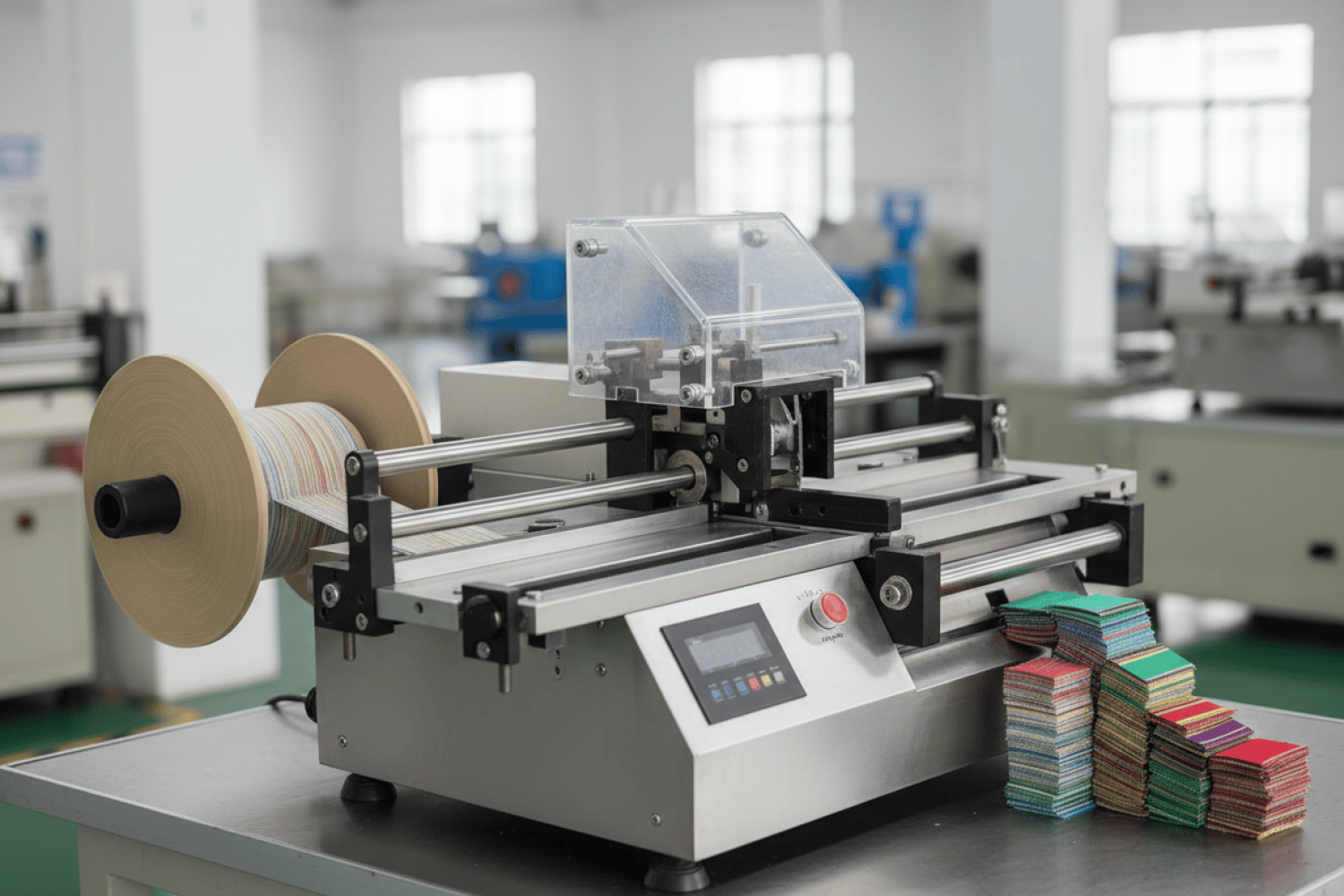
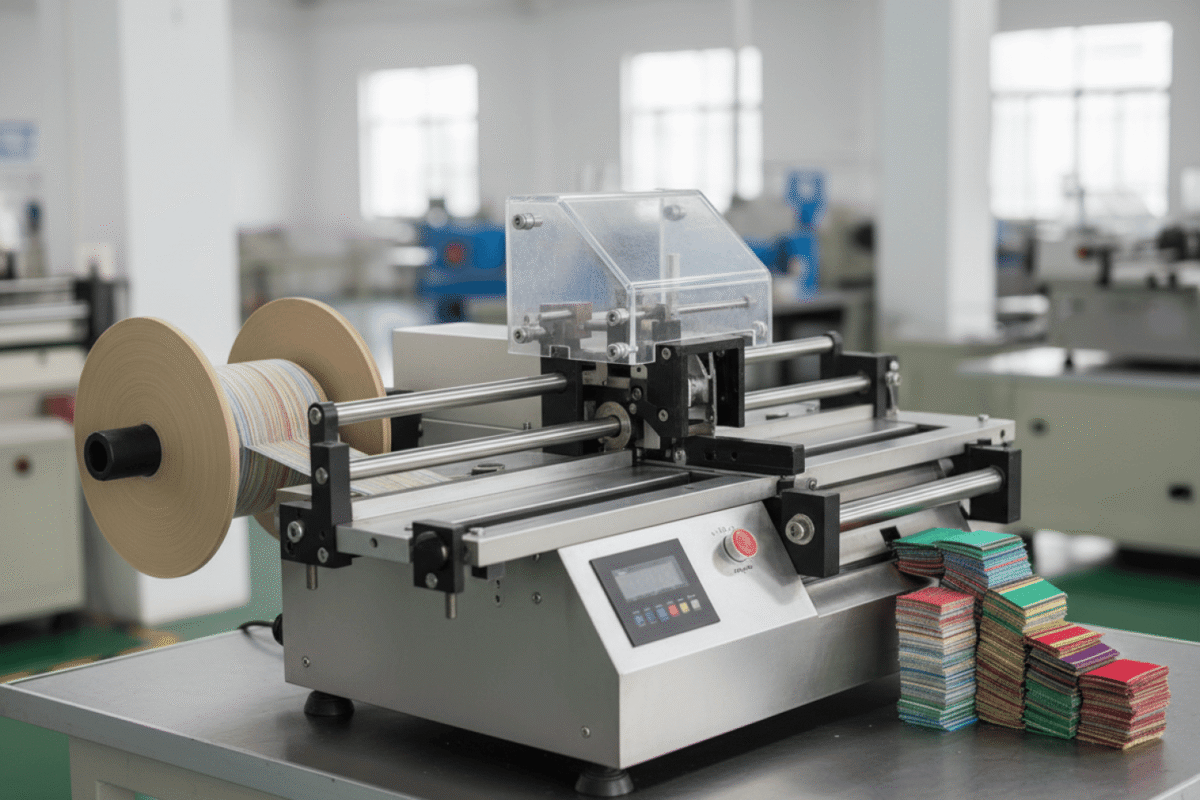
An automatic cutter feeds a printed or woven tape, measures its target length and separates it into finished labels. Depending on the model, it may also detect printed registration marks, stack the pieces, fold them or perform additional operations. The critical buying specifications are label width, cut length, tolerance, output rate, feed mechanism and the supported cutting process.
A model example is the JQ-3012 fully automatic hot-and-cold trademark cutting machine. Its product page describes adjustable cutting lengths and both hot and cold cutting methods; verify the selected configuration with the seller rather than assuming every accessory is included.
Cold cutting: when a clean mechanical cut is enough
Cold cutting separates the material with a blade without deliberately heating the cut edge. It is commonly considered for paper or materials that do not need thermal edge sealing. Some woven textiles may fray after a cold cut, so the behavior of the actual tape needs testing before choosing this method.
Ask for a sample: Does the cut create fuzz, loose threads, edge distortion or unacceptable variation between pieces? Consider blade type and maintenance access as well as initial sharpness.
Hot cutting: cut and seal compatible synthetic edges
A hot knife uses heat during cutting and may seal suitable thermoplastic materials, helping limit fraying. It is not universally suitable: some materials can melt unevenly, discolor, leave hardened edges or release fumes if operated incorrectly. The acceptable temperature and dwell characteristics depend on the substrate and blade system.
Hot cutting can be useful for selected synthetic garment labels, ribbons or tapes. Request samples on both printed and unprinted areas, because the ink or coating may react differently to heat. Use appropriate extraction, guarding and operator training.
Ultrasonic cutting: a specialized option
Ultrasonic systems use high-frequency mechanical vibration and tooling to cut and, for compatible synthetic materials, seal edges. The result can be a clean label edge with a different feel from a traditional hot knife. However, the quality depends on material composition, tooling and machine settings. This is not a universal alternative to every hot or cold cutter.
A sensible purchasing trial begins with three representative label materials: your most common substrate, your most difficult slippery or stretchy material, and the widest or thickest material you plan to process. Include printed registration marks where used.
Feed each material under the proposed machine settings and note any slip or skew.
Cut a short series and measure actual length, width and squareness.
Inspect edges visually and by touch for fraying, melting, distortion or sharpness.
Test stacks or folds if the machine includes those functions.
Check whether printed inks are affected and whether labels pass any required washing or handling test.
Record rejects, setup time, operator steps and any recurring jams.
Maintenance and operating safety
Cutting tools create pinch, sharp-edge, thermal and electrical hazards. Only trained personnel should operate or service the machine. Keep guards and interlocks in place, use the maker’s approved blade or horn replacement procedures and isolate energy before maintenance. Clean feed rollers and sensors as instructed, and record blade condition to prevent declining cut quality.
Frequently asked questions
Is a hot knife better than an ultrasonic cutter for woven labels?
Neither is universally better. Compare actual edge feel, fray resistance, fabric response, throughput and supplier-maintenance requirements using the same woven tape.
Will an automatic cutter read printed marks?
Only if that model has a compatible mark sensor and controller. Ask to see a trial with your registration marks.
Can the same cutter handle paper and polyester ribbon?
Possibly, but it depends on tooling and settings. Different materials may require different blades, temperatures or operating modes; confirm with the equipment supplier.
Conclusion
The best automatic label cutting machine is the one that reliably meets your material, edge quality, size tolerance and finishing requirements. Comparing production samples is more useful than buying solely by quoted maximum speed.